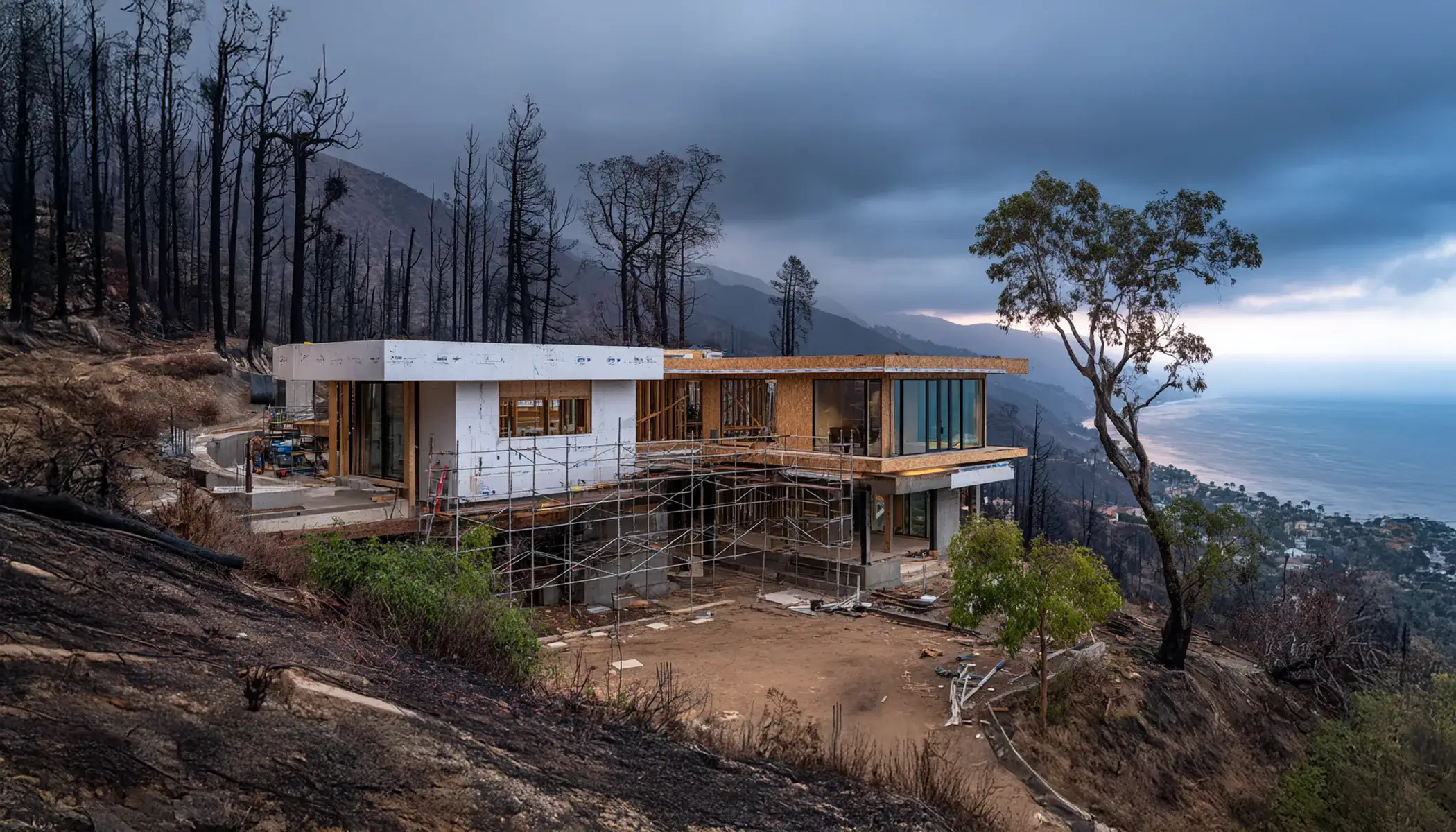

The biggest shift in Westside Los Angeles real estate right now is not interest rates. It is the Los Angeles home insurance crisis. After working in the Westside market for over 14 years, this is one of the fastest changes in buyer behavior I have seen. The insurance landscape, especially following the January 2025 Palisades fire, is quietly reshaping where people choose to buy. If you are buying or selling anywhere from Bel Air to Westwood, the Los Angeles home insurance crisis is now part of your transaction whether you realize it or not.
What Caused the Los Angeles Home Insurance Crisis
The Palisades fire destroyed more than 16,000 structures and displaced thousands of families. Many of those families had roots on the Westside, kids in local schools, and jobs within a short commute. They needed to stay in the area. So they started looking in the neighborhoods they could still afford and, critically, still insure.
At the same time, the California FAIR Plan, the state’s insurer of last resort, now covers more than 668,000 policies statewide with total exposure around $724 billion. A proposed rate increase averaging 35.8 percent is on the table, though individual impacts vary wildly. Some homeowners in low-risk areas may see modest decreases. Others in high-risk fire zones could see increases exceeding 300 percent.
According to a recent Insurify report, California homeowners could face an additional 16 percent rate increase by the end of 2026. Since 2023, home insurance costs in California have already risen 16.1 percent, pushing the cumulative increase to roughly 34 percent. Nearly 400,000 insurance policies have been canceled across the state since 2021, making this one of the most significant disruptions to the housing market in recent memory.
For a home valued at $3 million to $5 million in a hillside or brush-adjacent area, annual premiums through surplus lines carriers can run $30,000 to $60,000. Over a 10-year hold, the insurance cost gap between a home in a Very High Fire Hazard Severity Zone and a home in a moderate-risk flatland neighborhood can exceed $200,000. That gap changes the math on what a property is actually worth.
How the Los Angeles Home Insurance Crisis Is Shifting Buyer Behavior
The pattern is straightforward. Buyers who would have considered hillside properties in Bel Air, upper Brentwood, or the Palisades are now factoring insurance costs into their purchasing power. Some are choosing not to take on that risk at all. Where are they going instead? Flatland, walkable, lower-elevation neighborhoods with standard insurance availability.
Westwood, Cheviot Hills, Beverlywood, Century City, and the flatland sections of West LA are absorbing that demand. These neighborhoods sit in moderate-risk or low-risk zones. Insurance is obtainable through traditional carriers at premiums closer to $3,500 to $6,500 per year, depending on the home’s value and condition. That is a fraction of what a hillside property costs to insure.
The result is more competition for a housing supply that was already tight. In Cheviot Hills, homes are now selling for an average of 104.8 percent of list price, up from 97.6 percent a year ago. Days on market dropped from 70 to 40. Much of that acceleration is driven by displaced demand flowing into neighborhoods that were already popular.
According to the National Association of Realtors, 13 percent of California Realtors reported that at least one sale fell through in 2025 because buyers could not secure homeowners insurance. That is nearly double the rate from the previous year and a clear signal that the Los Angeles home insurance crisis is no longer a background issue.
Why Flatland Neighborhoods Are Seeing Increased Demand
Flatland neighborhoods are benefiting from the Los Angeles home insurance crisis for one fundamental reason: certainty. Buyers today are prioritizing predictable monthly costs, easier financing approvals, and fewer unknowns after closing. When insurance becomes uncertain or expensive, buyers either reduce their price range or change locations. Right now, many are choosing to change locations entirely.
This shift is creating a ripple effect across the Westside. Neighborhoods like Cheviot Hills and Beverlywood, which have always been desirable, are now attracting buyers who previously had their sights set on properties well above the $4 million mark in hillside areas. That additional demand is compressing inventory and pushing prices upward in communities that already had limited supply.
What the Los Angeles Home Insurance Crisis Means If You Are Selling
If your property is in Westwood, Cheviot Hills, Beverlywood, or Century City, your buyer pool has expanded. Families who previously would not have considered your neighborhood are now actively looking there because the insurance economics work. That increased competition gives sellers stronger negotiating positions, particularly for move-in ready homes that do not require buyers to take on renovation costs on top of the purchase.
Pricing strategy matters more than ever in this environment. A well-priced home will generate multiple offers and strong interest. An overpriced home will still sit, regardless of broader demand, because buyers in this market are doing more financial analysis before they write offers. They are running insurance quotes alongside their mortgage pre-approvals and factoring in long-term ownership costs before making decisions. If you are considering selling, our Westwood Market Update 2026 provides additional context on current pricing trends.
What Buyers Should Do Before Making an Offer During the Insurance Crisis
If I could give one piece of advice to every buyer on the Westside right now, it would be this: get insurance quotes before you make an offer, not after. Lenders require insurance to fund your mortgage. If you cannot obtain coverage, or if the premium makes the monthly cost untenable, it does not matter how much you love the house.
For any property in or near a fire hazard zone, ask the seller about their current policy. Find out if they are on the FAIR Plan or a traditional carrier. Request the property’s fire hazard severity zone designation from the city. These are knowable facts that should inform your offer price, not surprises that derail your transaction in escrow.
For properties in lower-risk neighborhoods, be prepared for competition. Have your financing locked. Know your ceiling before you walk into a showing. The buyers you are competing against may have already lost out on a hillside property and redirected their full budget into your price range. For a deeper look at what homes cost across the Westside, see our guide on how much it costs to buy a home in Westwood.
The Bigger Picture for the Los Angeles Real Estate Market
The Los Angeles home insurance crisis has transformed insurance from a line item into a market force. It is redirecting billions of dollars in buyer demand toward specific neighborhoods and away from others. The neighborhoods benefiting from this shift, the flatland communities across the Westside, are seeing real and measurable price pressure that will likely continue as long as the insurance market remains constrained.
Understanding which side of that equation your property sits on is no longer optional. It is the starting point for any smart buying or selling decision on the Westside in 2026. If you want to understand how the insurance crisis affects your specific property or neighborhood, I would welcome the opportunity to walk you through the current data.
Frequently Asked Questions About the Los Angeles Home Insurance Crisis
How is the Los Angeles home insurance crisis affecting home prices on the Westside?
The Los Angeles home insurance crisis is pushing buyer demand away from hillside and fire-prone areas toward lower-risk flatland neighborhoods like Westwood, Cheviot Hills, Beverlywood, and Century City. This increased competition in those neighborhoods is driving faster sales and higher sale-to-list price ratios. In Cheviot Hills, for example, homes are selling at 104.8 percent of list price, up from 97.6 percent a year ago. Meanwhile, 13 percent of California Realtors reported at least one transaction falling through over insurance issues in 2025, nearly double the prior year’s rate.
How much does home insurance cost in hillside versus flatland neighborhoods on the Westside?
Hillside and brush-adjacent properties on the Westside can cost $30,000 to $60,000 per year to insure through surplus lines carriers for homes valued between $3 million and $5 million. Flatland neighborhoods like Westwood, Cheviot Hills, and Century City typically see premiums between $3,500 and $6,500 per year through standard carriers. Over a 10-year hold, that difference can exceed $200,000 and significantly affects the total cost of ownership.
What is the California FAIR Plan and how does it affect real estate transactions?
The California FAIR Plan is the state’s insurer of last resort for properties that cannot obtain coverage through traditional carriers. It currently covers more than 668,000 policies statewide with total exposure around $724 billion. A proposed average rate increase of 35.8 percent is pending, with some homeowners in high-risk fire zones facing increases over 300 percent. Properties relying on the FAIR Plan may face a smaller buyer pool because the high premiums reduce purchasing power and can complicate mortgage approvals.
Should I get insurance quotes before making an offer on a Westside home?
Yes. Insurance should be one of the first steps in your buying process, not one of the last. Mortgage lenders require insurance to fund your loan. If a property falls in or near a fire hazard zone and coverage is expensive or difficult to obtain, that directly affects your budget and whether the deal can close. Knowing your insurance costs upfront prevents surprises during escrow and gives you stronger footing during negotiations.
Which Westside LA neighborhoods are considered lower risk for wildfire insurance?
Flatland neighborhoods with lower fire hazard severity zone designations include Westwood, Cheviot Hills, Beverlywood, Century City, and much of West LA. These areas are generally insurable through traditional carriers at standard rates. Hillside areas of Bel Air, upper Brentwood, and Pacific Palisades carry higher risk designations and face significantly higher premiums or limited coverage options as a direct result of the Los Angeles home insurance crisis.
Insurance Disclaimer
The information provided above is for general informational purposes only and reflects current market observations. Payman Shilian and The Shilian Group are not licensed insurance professionals and do not provide insurance advice. Insurance availability, coverage, and pricing can vary significantly by property. Buyers and sellers should consult directly with a licensed insurance professional for guidance specific to their situation.
Is insurance changing your plans?
Carrier withdrawals are affecting what buyers can qualify for, which shows up as longer escrows and late renegotiations. If you plan to sell within the year, price and prep with that in mind.
Get a Westwood seller consultation · Westwood pricing strategy

About the Author
Payman Shilian
Compass Real Estate Agent · Wilshire Corridor & Westwood Specialist · CA DRE 01913874
Payman Shilian has worked the Wilshire Corridor and Westwood markets for 14 years, closing 203 local transactions totaling over $210 million in career sales. Building-by-building expertise across The Carlyle, The Remington, The Wilshire, Beverly West, and the 40+ buildings of the Millionaires’ Mile. Persian and Farsi speaking. Doctorate of Pharmacy from UC San Diego. Designated Realtor for the City of Beverly Hills. Member, National Association of Realtors and California Association of Realtors. Philanthropic involvement with Children’s Hospital of Los Angeles.
Reach Payman directly: (310) 299-7655 · pshilian@compass.com · paymanshilian.com
Explore: Wilshire Corridor · Westwood 90024 · Downsizing Playbook · About Payman
