
By Payman Shilian | The Shilian Group | Powered by Compass
Disclaimer: This article about Westwood multi-generational homes is for informational purposes only and does not constitute real estate, financial, tax, or legal advice. Property suitability for multi-generational living depends on specific conditions, zoning, and family needs. Buyers should consult qualified professionals for guidance specific to their situation.
The fastest-growing buyer segment in Westwood is not the tech executive or the foreign investor. Instead, it is the extended family looking for a property that works for multiple generations living together or in close proximity. Westwood multi-generational homes have moved from a niche request to a core part of the luxury market conversation in 90024. Indeed, several forces are driving this shift. Rising housing costs across Los Angeles, cultural preferences among the diverse buyer pool on the Westside, and the practical reality that keeping family close all play a role.
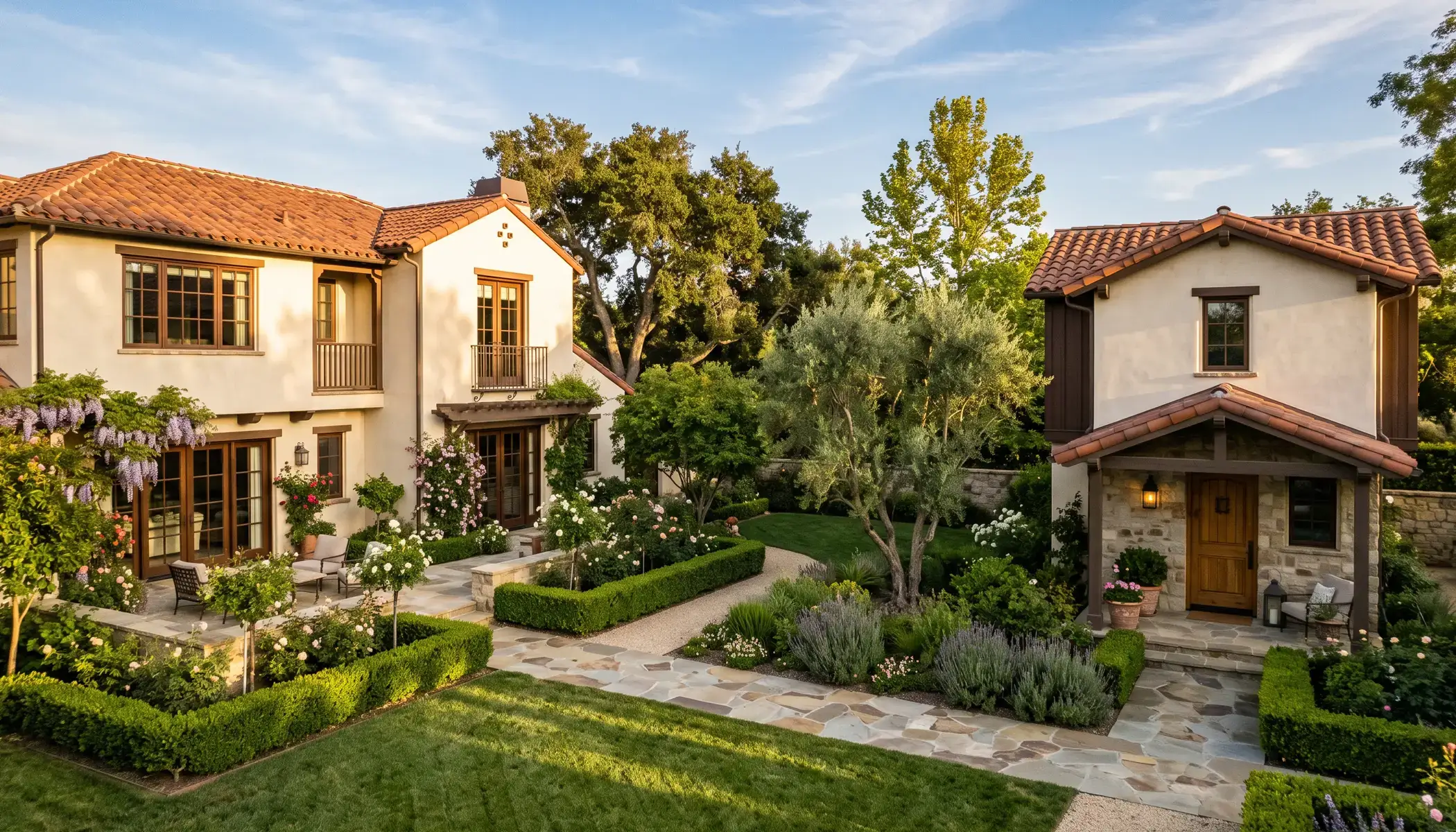
In practice, the demand takes different forms. Some families want a single large estate. They need enough bedrooms, bathrooms, and private space to accommodate three generations under one roof. Others want a property with a detached guest house, ADU, or converted garage unit. These options give aging parents or adult children their own space while remaining on the same lot. A smaller subset wants adjacent properties on the same street or in the same building. This approach is particularly relevant on the Wilshire Corridor, where families sometimes buy units on the same floor.
As a Westwood resident and Westside Los Angeles real estate specialist, I have been working these markets for 14 years. In that time, I have closed 203 local transactions totaling over $210 million in career volume. Notably, a growing share of those transactions involve families evaluating properties through a multi-generational lens. Here is what actually works in Westwood, where to look, and what to plan for.
Why Multi-Generational Living Is Growing in Westwood
Several structural forces are driving demand for Westwood multi-generational homes, and most of them are accelerating rather than fading.
First, housing affordability across Los Angeles is the most obvious factor. Even families with substantial resources face a market where setting up independent households for adult children or aging parents means paying Westside prices multiple times. A family that can afford one $5 million property in Comstock Hills may not be able to afford a second $2 million property nearby for the parents. As a result, a single property that accommodates everyone is often the more practical solution.
Second, cultural preferences are equally important. Westwood’s buyer pool includes significant Iranian-American, East Asian, South Asian, and Middle Eastern representation, communities where multi-generational living is not an economic compromise but a preferred lifestyle. In my experience, these families are not reluctantly doubling up. Rather, they are actively seeking properties designed or adaptable for extended family living. Accordingly, the family structure is the starting point, and the property search follows from it.
Third, the aging-in-place movement is another key driver. Adult children who want their parents nearby but not in institutional care have specific needs. They look for properties with separate living quarters, single-story access, and proximity to Westside medical facilities. In particular, UCLA Health, Cedars-Sinai, and the concentration of specialists across the Westside make Westwood a practical base for families prioritizing healthcare access.
Finally, California’s Prop 19 has made it financially advantageous for parents to transfer their primary residence to children. In doing so, they can preserve the existing property tax base. I cover this in detail in my Prop 13 and Prop 19 strategy guide. Consequently, this incentivizes keeping family property within the family across generations, which in turn increases demand for properties that can accommodate that structure.
What Makes a Westwood Property Work for Multiple Generations
Of course, not every large home is a multi-generational home. The properties that work best share specific features that create privacy, independence, and accessibility within a single lot.
Above all, separate entries are the most important practical feature. When a parent or adult child has their own entrance, the sense of independence changes dramatically. It is far different from walking through someone else’s living room to reach your bedroom. Properties with side entries, rear entries, or detached structures naturally create this separation. Ground-floor bedroom suites with en-suite bathrooms and a private sitting area can function as an independent living space. However, this works best when there is a separate entry or at least a dedicated hallway that avoids the main living areas.
Accessibility and Kitchen Flexibility
Single-story access or an elevator matters for aging family members. Certainly, many of the larger homes in Little Holmby and Comstock Hills are two-story, which can be problematic for elderly parents with mobility limitations. As a result, properties with a primary suite on the ground floor command a premium. Homes with existing elevator installations are similarly valued by multi-generational buyers. Adding an elevator to an existing Westwood home typically costs $30,000 to $80,000 depending on the type and configuration.
Kitchen flexibility is the third feature that matters more than most buyers initially realize. Families living multi-generationally often need either a second kitchen or a substantial wet bar and kitchenette in the separate living area. California ADU regulations now allow full kitchens in accessory dwelling units. However, adding a second kitchen to the main structure can trigger permit and zoning questions that vary by situation.
Furthermore, outdoor space with privacy separation also factors in. Properties with courtyards, separate patios, or enough yard to create distinct outdoor living areas allow each generation to have their own space. Clearly, this is where Westwood’s larger lot sizes in Little Holmby and Comstock Hills become particularly advantageous compared to more compressed neighborhoods.
Where to Find Westwood Multi-Generational Homes by Sub-Neighborhood
The search for Westwood multi-generational homes naturally concentrates in specific parts of 90024, and my sub-neighborhood comparison guide provides the broader context for each area.
Little Holmby offers the largest properties in Westwood. Lot sizes frequently exceed 10,000 square feet, and homes run 4,000 to 10,000 square feet of living space. Indeed, many properties in this area already have guest houses, pool houses, or detached structures that can serve as independent living quarters. The price point typically ranges from $5 million to $20 million. This reflects both the location premium and the space that multi-generational buyers need. This is the top tier for families who want a true estate experience with full separation between living areas.
In contrast, Comstock Hills is the strongest value play for Westwood multi-generational homes. Lot sizes in the 7,000 to 12,000 square foot range, combined with homes that typically run 3,000 to 5,000 square feet, provide enough space for multi-generational configurations. Properties in the $3 million to $5 million range often have four to five bedrooms. The lot sizes also support ADU additions. As a matter of fact, many families find that a Comstock Hills property with an ADU added afterward provides the best balance of space, privacy, and value. For current pricing, my Westwood cost guide breaks down the market by area.
South of Wilshire and the Wilshire Corridor
South of Wilshire offers more accessible price points in the $2 million to $4 million range with smaller lots. Multi-generational living here typically takes the form of a larger home with a converted garage ADU or a junior ADU carved from existing space. The lots are smaller, so the separation between living areas is less dramatic than in the neighborhoods north of Wilshire. However, the price advantage is significant for families who need to accommodate multiple generations without a $5 million budget.
On the other hand, the Wilshire Corridor serves multi-generational families differently. Rather than a single estate, families on the Corridor often purchase adjacent or nearby units in the same building. A common pattern is parents in a two-bedroom unit on one floor and adult children in a three-bedroom unit a few floors above. The full-service lifestyle works well for these families. Concierge access and social infrastructure add further appeal for those who want proximity without shared walls. My downsizing guide covers the single-family-to-condo transition that often accompanies this move.
Adding an ADU for Multi-Generational Living in Westwood
Some families find the right property in terms of location and primary home but need additional living space. For these buyers, adding an ADU is often the most practical path to a multi-generational configuration.
California’s ADU laws allow homeowners to build a detached accessory dwelling unit up to 1,200 square feet on most single-family lots without discretionary approval. Specifically, the unit can include a full kitchen, bathroom, bedroom, and living area, functioning as a fully independent home. For multi-generational families, this means aging parents or adult children can have genuine independence on the same property.
Specifically, the practical considerations in Westwood include construction costs, which typically run $250,000 to $500,000 for a detached ADU depending on size and finish level. Permit timelines in Los Angeles generally run 6 to 12 months from application to completion. Setback requirements, lot coverage limits, and existing improvement placement all affect where the ADU can sit on the lot. My ADU guide covers the full process, costs, and regulatory framework.
One important consideration for Westwood multi-generational homes with ADUs is that the ADU cannot be sold separately from the primary residence. It remains an accessory to the main property. This means the family is investing in the overall property value rather than creating a separate asset. When it comes time to sell, the ADU adds value to the property as a whole but cannot be separately conveyed.
Financial Considerations for Multi-Generational Buyers
The financial structure of a multi-generational purchase in Westwood involves several considerations beyond the standard transaction.
To begin with, shared down payments and mortgage qualification are the first complexity. When multiple family members contribute to the purchase, lenders need to understand the source of funds. They also scrutinize the borrowing structure. Notably, gift funds from family members have specific documentation requirements. Co-borrowing with parents or adult children affects debt-to-income ratios and may require creative structuring.
Prop 19 parent-to-child transfers deserve careful planning. Under current California law, a parent can transfer their primary residence to a child with a reassessment exclusion up to $1 million above the assessed value. For families where parents are moving from a long-held property with a low assessed value, this can represent tens of thousands of dollars in annual property tax savings. The rules are specific about timing, primary residence requirements, and filing deadlines, so working with a qualified tax professional is essential. My Prop 13 and Prop 19 guide explains the framework in detail.
Moreover, title and ownership structure is the third consideration. Properties held by multiple family members can be structured as joint tenancy, tenancy in common, through a family trust, or through an LLC. Importantly, each structure has different implications for property taxes, estate planning, liability, and future transferability. Ultimately, the right structure depends on the family’s specific situation and goals, and this is one area where professional legal and tax advice is not optional.
Equally important, insurance for multi-generational properties may also require attention. If the property includes an ADU or separate living quarters, the homeowner’s insurance policy needs to reflect the actual use. Rental use of the ADU, even to family members who pay below-market rent, can affect coverage requirements.
The Buyer Profile for Westwood Multi-Generational Homes
Buyers seeking Westwood multi-generational homes tend to fall into several recognizable patterns.
For instance, the most common is the established family with aging parents. Typically, the primary buyers are in their 40s to 50s with school-age children. They want their parents in a separate space on the same property rather than in a care facility or isolated apartment. The parents are usually in their 70s, still independent but benefiting from proximity to family and medical resources. This group gravitates toward Comstock Hills and South of Wilshire where the price points allow them to buy enough space without overextending.
The second pattern is the high-net-worth family purchasing a Little Holmby or premium Comstock Hills estate specifically for its multi-generational capacity. These buyers are often working with a $5 million or higher budget. They prioritize guest houses, separate entries, and enough acreage for genuine privacy between generations. The cultural emphasis on extended family living is frequently the driving motivation.
The third pattern is the Wilshire Corridor family that buys multiple units for different generations. This approach leverages the Corridor’s full-service buildings to provide each generation with independent living. Meanwhile, everyone stays in the same building with shared amenities, security, and social infrastructure.
How the Multi-Generational Search Works in Practice
When a family comes to me looking for Westwood multi-generational homes, the conversation starts differently than a standard buyer consultation. The first question is not about budget or bedroom count. It is about who is living in the home and how much independence each generation needs.
Consider a family where the grandparents want to cook their own meals, keep their own schedule, and have guests over independently. That family needs a fundamentally different property than one where the grandparents share meals and common areas with the main household. The first scenario requires a separate structure or clearly divided space with its own kitchen and entry. The second scenario can work in a large home with a ground-floor bedroom suite.
From there, we narrow to sub-neighborhoods based on budget and space requirements. We then evaluate existing properties with multi-generational features and identify ones that could be adapted through ADU construction or renovation. In many cases, the best approach is to buy a well-located property on a large lot. After closing, the family can then build the ADU or guest house to their specific requirements.
The overall Westwood 90024 market context provides the broader picture for buyers at any stage of this process.
Frequently Asked Questions About Westwood Multi-Generational Homes
Which Westwood sub-neighborhoods are best for multi-generational homes?
Little Holmby offers the most space and the highest likelihood of existing guest houses or detached structures. Comstock Hills provides the best balance of lot size, home size, and price point for multi-generational configurations. South of Wilshire offers the most accessible price points with ADU potential. The right choice depends on budget and how much separation the family requires.
Can I add an ADU to my Westwood property for aging parents?
In most cases, yes. California ADU law allows a detached unit up to 1,200 square feet on qualifying single-family lots through a ministerial approval process. The unit can have a full kitchen, bathroom, and living space. Construction costs in Westwood typically run $250,000 to $500,000 depending on size and finish level.
How does Prop 19 affect multi-generational property transfers in Westwood?
Prop 19 allows parents to transfer their primary residence to children with a property tax reassessment exclusion up to $1 million above the current assessed value. For families with long-held Westwood properties on low tax bases, this can save tens of thousands annually. Specific timing, primary residence, and filing requirements apply.
What features should I look for in a Westwood multi-generational home?
The most important features are separate entries for each living area, ground-floor bedroom suites or elevator access, kitchen or kitchenette capability in the secondary space, and enough outdoor area for privacy separation. Properties with existing detached guest houses or pool houses are the most immediately functional for multi-generational use.
Are Westwood multi-generational homes a good investment?
Properties that accommodate multiple generations tend to have broader buyer appeal at resale. They also command higher prices because of their flexibility. In addition, the ADU generates strong rental income potential if the family eventually moves on. The investment thesis is strong for well-located properties with genuine separation between living areas.
How much does it cost to convert a Westwood home for multi-generational living?
The cost depends on the scope of work. Adding a detached ADU typically costs $250,000 to $500,000. Converting an existing garage to a living space runs $100,000 to $250,000. Interior renovations to create a separate bedroom suite with kitchenette and private entry can range from $75,000 to $200,000. These are rough ranges and vary by property condition and finish level.
Can I buy two adjacent units on the Wilshire Corridor for my family?
Yes, and this is a common multi-generational strategy on the Corridor. Families purchase units in the same building, often on the same floor or within a few floors of each other. The full-service building amenities, concierge, and security infrastructure make this approach work well for families who want proximity without shared walls.
Final Thoughts
Westwood multi-generational homes represent one of the strongest and most enduring trends in the 90024 market. Large lot sizes in Little Holmby and Comstock Hills, flexible ADU regulations, and Prop 19 transfer benefits all support continued demand growth. Additionally, the cultural preferences of the diverse buyer pool on the Westside reinforce this trend. Finding the right property means starting with the family’s specific living arrangement needs. From there, match those needs to the right sub-neighborhood and property type.
You may be searching for an estate with an existing guest house or evaluating ADU potential on a Comstock Hills lot. Perhaps you are considering adjacent Wilshire Corridor units for your family. In any case, I am happy to walk you through your options. You can reach me at (310) 299-7655 or pshilian@compass.com.
Disclaimer: This article about Westwood multi-generational homes is for informational purposes only and does not constitute real estate, financial, tax, or legal advice. Multi-generational property decisions involve complex financial and legal considerations. Buyers should consult qualified attorneys, tax professionals, and real estate advisors for guidance specific to their situation.

About the Author
Payman Shilian
Compass Real Estate Agent · Wilshire Corridor & Westwood Specialist · CA DRE 01913874
Payman Shilian has worked the Wilshire Corridor and Westwood markets for 14 years, closing 203 local transactions totaling over $210 million in career sales. Building-by-building expertise across The Carlyle, The Remington, The Wilshire, Beverly West, and the 40+ buildings of the Millionaires’ Mile. Persian and Farsi speaking. Doctorate of Pharmacy from UC San Diego. Designated Realtor for the City of Beverly Hills. Member, National Association of Realtors and California Association of Realtors. Philanthropic involvement with Children’s Hospital of Los Angeles.
Reach Payman directly: (310) 299-7655 · pshilian@compass.com · paymanshilian.com
Explore: Wilshire Corridor · Westwood 90024 · Downsizing Playbook · About Payman
